



 English
 Deutsch
 Français
 Español
 Nederlands
Puma
Like page


PUMA is one of those brands where sport and streetwear have been crossing paths for decades. Football, running, basketball, and motorsport have all produced silhouettes that today live far beyond the pitch, track, or driver’s seat. At 43einhalb, the selection is deliberately curated: the current focus is on classics such as the PUMA Suede, the low-profile motorsport DNA of the PUMA Speedcat, and selected indoor, football, and retro-inspired silhouettes.
That makes PUMA a great example of how different sports heritage can look: from the timeless Suede to ultra-slim low-profile sneakers and models inspired by indoor football, training, or running.
PUMA at 43einhalb at a glance
| Model world | Origin | Look | Works especially well with |
|---|---|---|---|
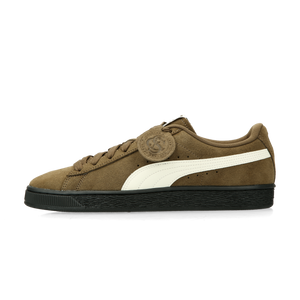
| PUMA Suede | Sport / Basketball / Street Culture | Classic / clean / timeless | Denim, cargos, and easy everyday fits |
| PUMA Speedcat | Motorsport | Low / slim / dynamic | Wide trousers, denim, and low-profile looks |
| PUMA King Indoor / Indoor | Football / Indoor Sport | Retro / sporty / terrace-inspired | Track pants, denim, and football-inspired fits |
| PUMA Arizona / Palermo | Archive / Terrace / Training | Low-profile / retro / relaxed | Wide denim, shorts, and casual looks |
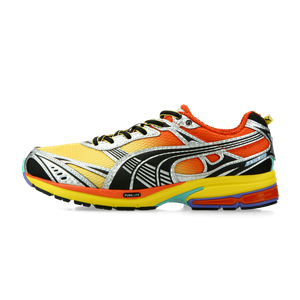
| PUMA Homura | Running / Archive | More technical / more substantial | Technical pants and sporty streetwear |
PUMA: sports heritage from Herzogenaurach
PUMA was founded in Herzogenaurach, Germany, by Rudolf Dassler in 1948. Its roots go back even further: Rudolf had previously developed sports shoes together with his brother Adolf Dassler before the two went their separate ways and founded their own companies.
PUMA focused early on performance footwear for football and running. In 1958, the Formstrip was patented – originally as a functional element designed to help stabilise the foot, today one of the brand’s most recognisable design signatures.
Over the decades, basketball, motorsport, and other sports were added to the mix. Many of the silhouettes that work so well in lifestyle today come directly from that huge archive.
PUMA Suede: the classic
The PUMA Suede is one of the most important sneakers in the brand’s history. Its roots go back to 1968, and its stripped-back construction already explains why the model has stayed relevant for so long: low profile, clean lines, the Formstrip, and an upper traditionally defined by suede.
The shoe was never limited to one context. From sport, it moved through basketball and hip-hop into breakdance, skate, and streetwear culture.
Today, the Suede works precisely because it does not try to look overly technical. With straight denim, cargos, shorts, or simple workwear trousers, it stays easy and lets material and colour do the talking.
Suede Classic, Suede XL, and special materials
PUMA regularly reinterprets the Suede. Classic versions remain relatively slim and close to the original shape, while styles such as the Suede XL add more volume, a heavily padded tongue, and a much stronger presence.
Special leather and suede versions add another layer. Higher-grade materials or editions using distinctive leathers can give the same base silhouette a completely different feel.
If you want the most classic PUMA look, the regular Suede is the obvious choice. If you prefer more volume and a stronger 90s/skate influence, the Suede XL makes more sense.
PUMA Speedcat: motorsport becomes streetwear
The PUMA Speedcat represents a completely different side of the brand. Its inspiration comes from motorsport, which explains the shoe’s extremely low stance and reduced sole.
That ultra-slim silhouette is exactly what makes the Speedcat relevant again today. After years of sneakers getting increasingly bulky, it represents the opposite direction: low profile, minimal sole height, and a shape that sits very close to the foot.
That makes it particularly strong with wider trousers. Wide denim, relaxed suit pants, or longer cargos create a sharp contrast with the narrow shape of the shoe.
Speedcat, Ballet, and Wedge: one idea, different directions
PUMA has expanded the Speedcat idea far beyond the original motorsport-inspired versions. More feminine interpretations such as the Speedcat Ballet and styles like the Speedcat Wedge deliberately push the low-profile concept in new directions.
Speedcat is therefore becoming less of a single model and more of a small design world. The common thread remains the slim shape and the connection between motorsport heritage and modern fashion.
PUMA Indoor and King Indoor: football DNA for everyday wear
Another part of the current PUMA selection at 43-einhalb.proes from indoor and football culture. Models such as the King Indoor tap into PUMA’s long football history and translate it into a low-cut sneaker.
Typical details include flat soles, a relatively direct profile, and classic sport references. That makes the silhouettes a strong fit for the current interest in football, terrace, and indoor-inspired footwear.
Track pants create a clear sporty look, while wide denim or chinos make the same shoe feel much calmer and more like an everyday sneaker.
Arizona, Palermo, and other archive silhouettes
PUMA has a huge archive that reaches far beyond Suede and Speedcat. Models such as Arizona and Palermo reference different moments in the brand’s sports and leisure history and return as low-cut retro sneakers.
What they usually share is a relatively slim shape, classic cupsole or gumsole aesthetics, and far less technical visual language than modern running shoes.
That makes them especially easy to wear if you want a retro sneaker that does not dominate the entire outfit.
PUMA Homura: the more technical side
The Homura shows the more substantial, running-inspired side of the PUMA archive. Layered uppers, mesh, and a more structured sole construction clearly separate it from the Suede, Speedcat, or Palermo.
That makes it a better match for technical trousers, sporty streetwear, and outfits where the sneaker itself can carry more visual weight.
Which PUMA is right for you?
The PUMA Suede is the safest choice if you want a classic, easy-to-wear sneaker with plenty of heritage.
The Speedcat is a better fit if you want an ultra-low, more fashion-driven silhouette. Indoor and King models bring football and terrace DNA into the outfit, while Arizona and Palermo lean more towards relaxed retro looks.
If you prefer a more technical and slightly bulkier running aesthetic, the Homura is the more interesting direction.
In short: Suede for the classic, Speedcat for low profile, Indoor for football DNA, and Homura for more running-tech.
The PUMA Formstrip
The Formstrip is one of PUMA’s most important visual signatures. It was patented in 1958 and was originally more than just branding: the leather strip was designed to help stabilise the foot inside the shoe.
Today, the Formstrip connects very different PUMA models – from the Suede to motorsport silhouettes and performance footwear – and has become just as recognisable as the leaping PUMA logo itself.
Sport, music, and street culture
The fact that so many PUMA classics work as lifestyle sneakers today is no accident. Models such as the Suede have been adopted and reinterpreted by different scenes over decades.
Basketball, hip-hop, breakdance, football culture, and motorsport have all left their mark on the brand. That is why the PUMA archive feels less like one single design direction and more like a collection of very different sporting and cultural moments.
PUMA collaborations
PUMA regularly uses its archive as a foundation for collaborations and special editions. Familiar silhouettes can take on a completely different character through materials, colours, or cultural references.
Selected collaborations also regularly appear in the PUMA range at 43einhalb. These drops complement the core models without making the brand page dependent on short-lived releases.
New PUMA sneakers at 43einhalb
The PUMA models in focus change with new archive releases, colourways, and collaborations. At 43einhalb, you’ll currently find selected Suede, Speedcat, Indoor, Arizona, and other PUMA silhouettes. Announced releases can also be found in our Coming Soon section.
Frequently asked questions about PUMA
Where is PUMA from?
PUMA comes from Herzogenaurach, Germany. Rudolf Dassler founded the company in 1948 after going separate ways from his brother Adolf Dassler.
What is the most famous PUMA sneaker?
The PUMA Suede is one of the brand’s best-known and most important lifestyle sneakers. Its history goes back to 1968 and connects sport, basketball, hip-hop, and street culture.
What is the PUMA Speedcat?
The PUMA Speedcat is an ultra-low sneaker with roots in motorsport. Its slim low-profile silhouette clearly sets it apart from classic running or basketball sneakers.
What is the difference between the PUMA Suede and Speedcat?
The Suede is a classic lifestyle sneaker with a traditional cupsole feel, while the Speedcat sits much lower and is more strongly influenced by motorsport. The Speedcat looks slimmer and more fashion-driven, while the Suede feels more classic and versatile.
What is the PUMA Formstrip?
The Formstrip is the signature side detail found on many PUMA shoes. It was patented in 1958 and originally developed to help stabilise the foot inside the shoe.
What is the PUMA King Indoor?
The King Indoor translates PUMA’s long football heritage into a low-cut indoor-inspired sneaker. Its flat silhouette works both with sporty outfits and as a retro lifestyle shoe.
Which PUMA works best for a low-profile look?
The Speedcat is the clearest low-profile option. Styles such as Palermo, Arizona, and selected Indoor silhouettes also have a relatively slim shape.
Are PUMA sneakers only sports shoes?
No. Many PUMA models have their roots in sport but today are mainly worn as lifestyle sneakers. Suede, Speedcat, and Palermo are good examples.
Are the PUMA sneakers at 43einhalb authentic?
Yes. At 43einhalb, you’ll only find authentic products sourced directly from the manufacturer or through official distribution channels.